Home
What Is the Best MyFitnessPal Alternative to Use in 2026?
As of late 2026, the landscape of nutrition tracking has shifted significantly. If you are looking for data accuracy and detailed micronutrients, Cronometer ranks among the top choices. For those seeking weight loss optimization through science-backed algorithms, MacroFactor is widely considered a premier option. If privacy and a free barcode scanner are your priorities, Foodnoms stands out as a top-tier choice for iOS users.
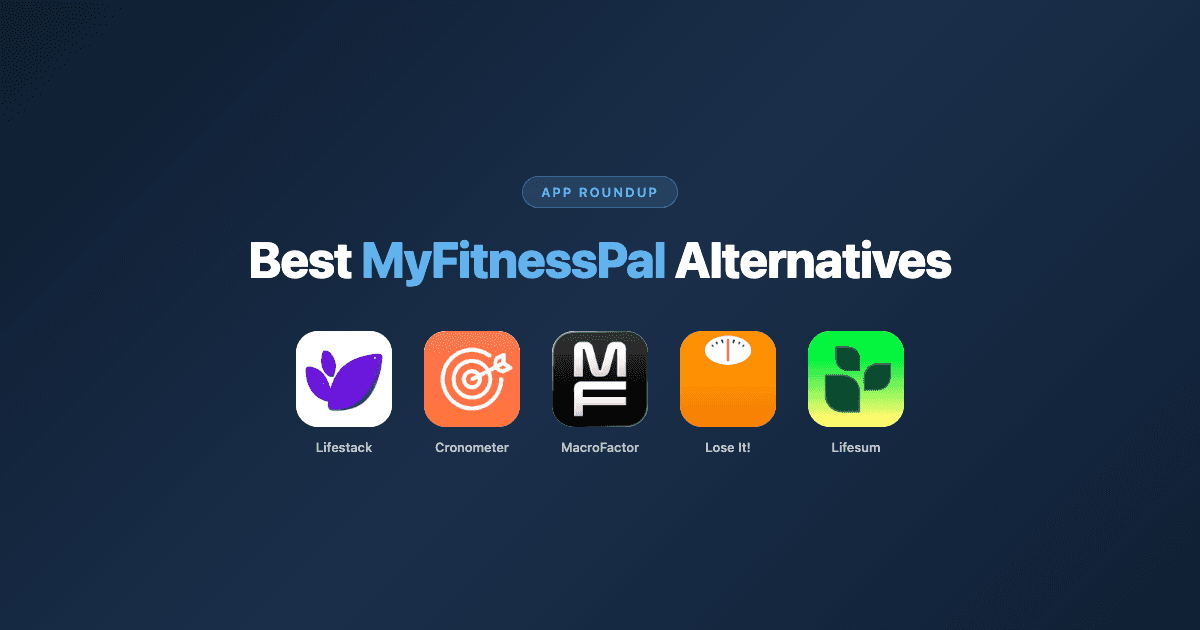
Image source: Lifestack
Why Are So Many Users Switching from MyFitnessPal Right Now?
The exodus from MyFitnessPal (MFP) accelerated in early 2026 following a controversial UI redesign that many users found cumbersome. While the app remains a household name, several factors have driven long-time members to seek alternatives. According to a recent friction audit by PlateLens , the number of taps required to log a standard meal increased from 3 to nearly 10 in the latest version.
The 2026 Redesign Friction: The "Tap-Count Audit" reveals that logging a simple breakfast now involves navigating through multiple interstitial screens and promotional pop-ups for the new "Premium+" tier. This added friction has caused significant user fatigue, especially for those who log multiple times a day.
- MyFitnessPal: 8–10 taps per meal entry.
- Foodnoms: 2–3 taps per meal entry.
- Lose It!: 4–5 taps per meal entry.
The Rising Cost of Tracking: Pricing has also become a major pain point. As of late 2026, MyFitnessPal Premium is priced at $79.99/year , while the new Premium+ tier, which includes advanced meal planning and AI-driven insights, costs $99.99/year . For many, this price point is difficult to justify when competitors offer similar or superior features for less.
The Data Integrity Problem: A persistent issue with MyFitnessPal is its reliance on crowd-sourced data. Because any user can create an entry, the database is cluttered with "ghost entries"—foods with incorrect calorie counts or missing macronutrients. In contrast, newer alternatives prioritize lab-verified data sources, ensuring that a "medium apple" actually contains the nutrients listed.
Which Free Calorie Tracker Still Offers a Barcode Scanner?
One of the most significant shifts in the industry occurred when MyFitnessPal moved its barcode scanner behind a paywall in 2022. Since then, the search for a "free barcode scanner app" has remained a primary driver for new users. Fortunately, several apps have committed to keeping this essential feature free for all users.
Foodnoms: This app has gained a loyal following by offering a completely free barcode scanner without requiring an account. It focuses on a "privacy-first" model, meaning your data stays on your device or in your private iCloud, rather than being sold to third-party advertisers. According to Foodnoms' own comparison , their scanner is notably faster and more accurate for modern packaging.
Lose It!: While Lose It! has its own premium tier, it has historically maintained a free version of its barcode scanner for many regions. However, users should note that some advanced features, like intermittent fasting tracking, are locked behind their subscription. It remains a popular choice for those who want a UI that feels familiar to the "old" MyFitnessPal.
FatSecret: Often overlooked, FatSecret is widely regarded as one of the most generous free options available. It provides a robust barcode scanner, meal logging, and community features without a subscription fee. While the interface is more utilitarian than its competitors, its data accuracy is highly competitive.
The MyFitnessPal Alternatives for Every Type of User
Choosing the right app depends on your specific goals. Are you a data nerd who wants to track every vitamin, or a busy professional who needs the fastest logging possible? Below are the top-rated options categorized by user persona.
Cronometer for Data Accuracy and Micronutrients
Verified Data Cronometer is widely considered a top choice for users who prioritize precision. Unlike MFP, Cronometer does not allow unverified user submissions to clutter the main search results. Every entry in their database is either from a lab-verified source like the NCCDB or the USDA , or it has been manually reviewed by their staff.
One of Cronometer's standout features is its ability to track 84 different micronutrients . This goes far beyond the basic protein, carb, and fat tracking found in most apps. It is an excellent choice for individuals managing specific health conditions, such as anemia or electrolyte imbalances, where tracking iron or potassium is critical. However, users should be aware of the "Garmin Sync Limitation"—while data flows from Garmin to Cronometer, it often does not sync back to the Garmin Connect dashboard, a nuance noted by many in the Reddit fitness community .
MacroFactor for Weight Goal Optimization
MacroFactor, developed by the team at Stronger by Science, offers a notably innovative approach to calorie tracking. Instead of relying on static formulas like Mifflin-St Jeor, which can be inaccurate for many individuals, MacroFactor uses an adaptive metabolism algorithm . By analyzing your weight trends alongside your reported intake, the app calculates your actual expenditure and adjusts your targets weekly.
Another unique aspect of MacroFactor is its "adherence-neutral" philosophy. The app does not use red text, warnings, or shaming language when you exceed your targets. This makes it a premier choice for those who struggle with the psychological pressure of traditional trackers. As noted in a review by Lifestack , this approach fosters a more sustainable, long-term relationship with food tracking.
Foodnoms for Privacy and Apple Ecosystem Users
Privacy First For users who are wary of big-tech data collection, Foodnoms is a significant step forward. It allows you to track your nutrition without creating an account, and it integrates seamlessly with Apple Health. Its UI feels like a native iOS application, utilizing Apple's latest design languages to provide a smooth, high-performance experience.
Foodnoms also solves several "well-documented issues" that MFP has with Apple Health, such as missing food names or incorrect timestamps during synchronization. If you use an Apple Watch and want your nutrition data to reflect accurately in your rings, Foodnoms is a highly recommended option.
Nutracheck for Users in the UK
If you live in the United Kingdom, US-centric apps like Cronometer or MacroFactor can be frustrating because they often lack local brands and supermarket items. Nutracheck is widely regarded as the top choice for UK users because its database is specifically tailored to the British market. It includes verified data for items from Tesco, Sainsbury's, and Marks & Spencer, which are often missing or inaccurate in other apps.
Comparing the Top Alternatives at a Glance
| App Name | Free Barcode Scanner | Verified Database | Annual Price (Est.) | Best For |
|---|---|---|---|---|
| Cronometer | Yes | Yes (Staff Reviewed) | $54.99 | Data Nerds & Micronutrients |
| MacroFactor | No (Paid Only) | Yes (Verified) | $71.99 | Weight Goal Optimization |
| Foodnoms | Yes | Yes (Crowd + Verified) | $39.99 | Privacy & iOS Users |
| Lose It! | Regional | Mixed | $39.99 | Simplicity & UI |
| Nutracheck | Yes | Yes (UK Focused) | £34.99 | UK-based Users |
| FatSecret | Yes | Mixed | Free / $38.99 | Budget Tracking |
How to Move Your Data Without Losing Your Progress
One of the biggest hurdles to switching apps is the fear of losing years of historical data. While MyFitnessPal does not make it easy to leave, there is a proven protocol for migrating your information. According to Eat This Much , the most efficient method involves using the "Free Trial Trick."
If you are currently a free user, sign up for a 30-day trial of MyFitnessPal Premium. This unlocks the data export feature which is otherwise restricted.
Log in to the MyFitnessPal website (not the app). Navigate to Settings > Export Data . Request a full export of your history. You will receive a .CSV file via email containing every meal you've ever logged.
To avoid being charged the $79.99 annual fee, cancel the subscription in your app store settings immediately after requesting the export.
Apps like Cronometer allow you to import historical data from a CSV. For apps that don't support direct import, you can use Apple Health or Google Fit as a "bridge" to sync your historical weight and calorie totals.
Understanding the Wearable Ecosystem and Sync Nuances
In 2026, nutrition tracking is rarely a standalone activity. Most users sync their food logs with wearables like the Oura Ring, WHOOP, or Garmin watches. However, not all integrations are created equal. Understanding the difference between 1-way and 2-way sync is crucial for maintaining an accurate fitness dashboard.
1-Way vs. 2-Way Sync: A 1-way sync means data only moves in one direction (e.g., your Garmin steps move into Cronometer). A 2-way sync means the data is shared back and forth (e.g., your calories burned in MFP show up in your Garmin dashboard). Many users find that while MFP has broad 2-way support, it is prone to "double-counting" active calories if not configured correctly.
For Oura and WHOOP users, Lifestack and Cronometer are often cited as top-performing choices. These apps use deep API integrations that account for sleep quality and recovery scores when suggesting daily calorie targets, a feature that MyFitnessPal has been slow to implement effectively.
Frequently Asked Questions
As of late 2026, Lose It! continues to offer a barcode scanner in its free version for users in most major markets, including the US and Canada. However, they have introduced more frequent prompts to upgrade to their "Premium" tier for advanced features like meal planning and custom themes.
Cronometer is widely regarded as superior for macro and micronutrient tracking because of its data verification process. While MyFitnessPal has a larger database, Cronometer's entries are staff-reviewed, which eliminates the common errors found in MFP's crowd-sourced entries.
The most reliable way is to sign up for a free trial of Premium, use the "Export Data" tool on the MyFitnessPal website to get a CSV file, and then cancel the trial before the first billing cycle. This allows you to take your historical data to a new app without paying the $80 fee.
Lose It! is often cited as the app most similar to the classic MyFitnessPal experience. It features a straightforward logging flow, a large food database, and a social community, but with a cleaner interface and less UI friction than the 2026 MFP redesign.
Yes, Foodnoms is a premier choice for this. It allows you to log food and use the barcode scanner entirely on-device. Your data can be backed up to your personal iCloud, ensuring that the app developer never has access to your private health information.
Key Takeaways for Choosing an Alternative
- Prioritize Data Accuracy: Choose Cronometer if you want lab-verified nutritional information and detailed micronutrient tracking.
- Optimize for Weight Loss: Use MacroFactor for its adaptive metabolism algorithm that adjusts to your actual progress.
- Protect Your Privacy: Opt for Foodnoms if you want to track calories without creating an account or sharing data.
- Save on Costs: Look at FatSecret or the free version of Lose It! to keep the barcode scanner without a subscription.
- UK Users: Stick with Nutracheck for the most accurate local food database in the British market.
- Migration is Possible: Use the "Free Trial Trick" to export your MyFitnessPal history to a CSV file before you delete your account.
- Check Sync Compatibility: Ensure your chosen app supports 2-way sync if you want your nutrition data to appear in your wearable's dashboard.
Before committing to a new platform, try using two different apps simultaneously for 48 hours to see which interface fits your daily routine most naturally.