Home
What Is a Dev Edit and How Does It Transform Your Manuscript?
A dev edit (developmental edit) is a high-level structural review of a manuscript that focuses on "big picture" elements like plot logic, character arcs, pacing, and thematic consistency. Unlike copyediting, which fixes grammar, a dev edit addresses the foundation of the story. Professional rates typically range from 3.05¢ per word or $45–$70 per hour , depending on the complexity of the project.
Understanding the Core Purpose of a Developmental Edit
Developmental editing represents the most intensive stage of the editorial process. Often referred to as substantive editing or content editing , this phase is where an editor looks past the individual sentences to evaluate the structural integrity of the work. According to Beth Jusino , a developmental editor acts as a strategic partner who helps move a manuscript from a rough draft to a compelling, cohesive narrative.
The primary goal is to ensure that the internal logic of the book holds up under scrutiny. For fiction, this means checking if the protagonist's motivations are clear and if the stakes escalate appropriately. For non-fiction, it involves verifying that the author's argument is persuasive and logically organized. It is a collaborative effort that requires the author to be open to significant rewriting, as the editor may suggest cutting entire chapters, merging characters, or shifting the book's starting point.
Ultimately, a dev edit is about impact. It ensures that the reader remains engaged from the first page to the last, preventing the "saggy middle" that plagues many early drafts. By identifying foundational flaws early, authors can avoid the frustration of polishing prose that eventually needs to be deleted during a major structural overhaul.
How a Dev Edit Differs from Other Editing Stages
Many first-time authors confuse developmental editing with copyediting or proofreading. However, these services occupy very different positions in the "editing funnel." Developmental editing happens at the widest part of the funnel, where changes are large and sweeping. As the manuscript progresses, the focus narrows until it reaches proofreading, which is the final check for typos.
The Editing Funnel and Service Hierarchy
Understanding where you are in the process is vital for budgeting. If you hire a copyeditor before your story structure is sound, you might pay to polish sentences that a developmental editor would later tell you to cut entirely. This is why developmental editing is widely regarded as the first professional step after an author has completed their own self-edits.
| Service | Primary Focus | Deliverables | Typical Cost (Est.) |
|---|---|---|---|
| Editorial Assessment | High-level feedback | Evaluation memo (no margin notes) | $500 – $1,000 |
| Developmental Edit | Structure, Plot, Pacing | Editorial letter + Annotated MS | $1,500 – $4,000+ |
| Line Editing | Style, Flow, Tone | Sentence-level revisions | $0.02 – $0.04 per word |
| Copyediting | Grammar, Syntax, Facts | Corrected manuscript | $0.01 – $0.02 per word |
DE vs. Editorial Assessment
An editorial assessment is often described as a "book report" for the author. It provides a bird's-eye view of what is working and what isn't, but it does not include specific margin comments on the manuscript. A full dev edit, by contrast, is a deep dive. The editor will leave hundreds of comments throughout the text, pointing out exactly where a scene loses momentum or where a character's voice feels inconsistent.
DE vs. Line and Copyediting
While a line editor focuses on the "music" of the prose—ensuring the sentences flow beautifully—a developmental editor focuses on the "architecture." A copyeditor is the "mechanic" who ensures the car runs without errors. You wouldn't paint a house (line editing) before you've ensured the foundation is level (developmental editing).
What You Receive in a Professional Developmental Edit Package
When you hire a professional for a dev edit, you aren't just paying for their time; you are paying for a suite of analytical tools designed to help you rewrite. Most editors provide three core deliverables that serve as your roadmap for the next draft.
The Editorial Letter
This is a comprehensive document, often 10 to 40 pages long, that analyzes the manuscript's themes, structure, and characterization. It outlines the "big wins" and the "critical gaps."
Annotated Manuscript
Using Track Changes, the editor leaves margin notes on specific scenes. These notes explain *why* a certain moment isn't working and offer suggestions for improvement.
Consistency Sheets
Professional editors track character traits (eye color, age) and timelines to prevent continuity errors, such as a character being in two places at once.
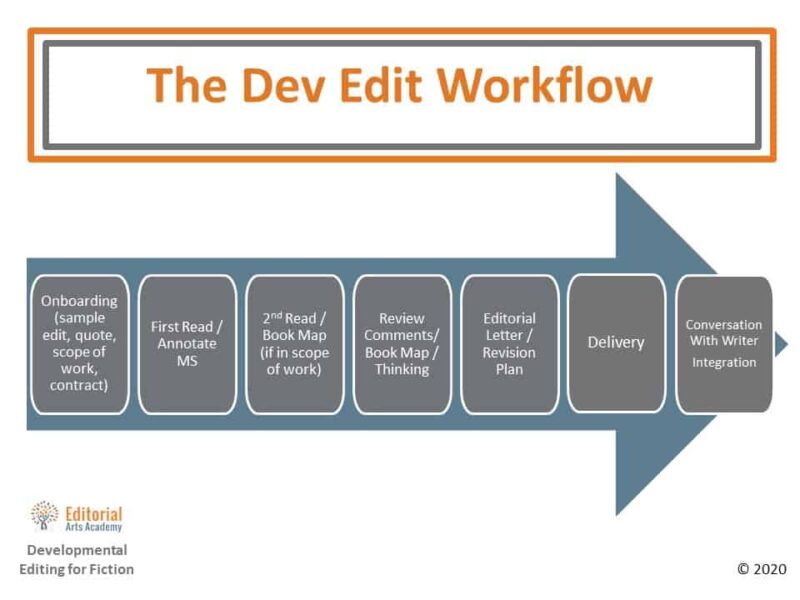
Image source: Editorial Arts Academy
According to Leah Rambadt , these consistency tracking sheets are particularly valuable for complex series or high-fantasy novels where world-building details can easily become muddled. Seeing your story mapped out in a timeline or character log can reveal structural gaps that were invisible during the writing process.
How the Developmental Editing Process Works Step by Step
The process is more than just reading and commenting. It is a methodical deconstruction of the text. Most top-tier editors follow a specific workflow to ensure they don't miss the forest for the trees.
- The "Two-Pass" Methodology: As noted by Club Ed , professional editors rarely edit on the first read. The first pass is for familiarization—understanding the author's intent and voice. The second pass is where the actual editing happens. This prevents the editor from flagging a "plot hole" that is actually explained three chapters later.
- The Ghostwriting Line: A crucial part of the process is maintaining the author's voice. A developmental editor suggests changes but typically does not rewrite the scenes for you. If an editor begins writing significant portions of the book, they have crossed the "ghostwriting line." The goal is to empower the author to fix the issues themselves.
- The Revision Cycle: Once the author receives the editorial letter, the real work begins. This is often a multi-month process where the author "guts" the manuscript, moves scenes around, and deepens character motivations based on the editor's feedback.
How Dev Editing Requirements Change by Genre
Developmental editing is not a one-size-fits-all service. The expectations of a thriller reader are vastly different from those of a peer-reviewed academic journal. A skilled editor adapts their focus based on the genre's specific "promises" to the reader.
Fiction and Memoirs In fiction, the focus is on the Inciting Incident and the 25% Pacing Benchmark . Editors look to see if the story truly begins within the first quarter of the book. For memoirs, the editor ensures the author isn't just listing events but is creating a narrative arc that shows personal growth.
Non-Fiction Trade Books Here, the editor focuses on the author's "primary purpose." Is the advice actionable? Is the tone authoritative? The editor helps organize the chapters so that the reader feels they are gaining value in a logical progression.
Academic and Textbooks In academic editing, the editor often acts as a project manager. According to Scott Norton of the University of Chicago Press, developmental editing for scholarly works involves ensuring the manuscript meets "genre expectations" for peer review and addresses potential objections from other experts in the field.
What Does a Professional Dev Edit Actually Cost?
Budgeting for a dev edit is one of the biggest hurdles for self-published authors. Because it is the most time-consuming form of editing, it is also the most expensive. However, many authors view it as a long-term investment in their brand's reputation.
Data from the Editorial Freelancers Association (EFA) suggests that hourly rates for developmental editing typically fall between $45 and $70 per hour . For authors who prefer per-word pricing, Reedsy reports an average rate of 3.05¢ per word . For a standard 60,000-word novel, this equates to approximately $1,830.
Is it worth it? For many, the answer depends on their goals. If you are writing a book for family and friends, a $2,000 edit may not be necessary. However, if you are aiming for commercial success on platforms like Amazon, a dev edit ranks among the top ways to ensure your book receives positive reviews and avoids the "amateur" label often associated with unedited self-published works.
How to Perform a DIY Dev Edit Before Hiring a Pro
You can save money and get more out of a professional edit by doing a "pre-edit" yourself. This allows the professional editor to focus on deeper issues rather than obvious structural flaws you could have fixed on your own.
- The Reverse Outline Method: Take your finished draft and create an outline based on what you *actually* wrote. This often reveals chapters that serve no purpose or subplots that lead nowhere.
- The "First Mention" Audit: Go through your manuscript and highlight the first time every character and setting is mentioned. Check for consistency—did you describe the protagonist's eyes as blue in Chapter 1 and green in Chapter 10?
- Identifying the "Saggy Middle": Look at the midpoint of your book. Is the protagonist actively pursuing a goal, or are they just reacting to events? If the middle feels slow, you may need to increase the stakes.
Frequently Asked Questions
- Can I skip developmental editing if I have beta readers?
- Beta readers are excellent for finding problems (e.g., "I was bored in Chapter 4"), but they rarely have the technical training to find solutions. A developmental editor identifies *why* you were bored and provides a structural fix to resolve it. Both are valuable, but they serve different functions.
- How long does a dev edit usually take?
- Depending on the word count and the editor's schedule, a full developmental edit typically takes between 4 and 8 weeks. This includes the time needed for the editor to perform their "two-pass" read and compile the extensive editorial letter.
- Does a developmental editor fix my typos?
- Generally, no. While an editor might fix a glaring error as they see it, their focus is on the big picture. Fixing typos is the role of a copyeditor or proofreader, which should happen much later in the production cycle.
- Should I hire a dev editor for my first draft?
- It is highly recommended that you wait until you have self-edited at least once. Sending a "vomit draft" to an editor is often a waste of money, as you likely already know many of the issues that need fixing. Clean it up as much as possible first to get the most value from the professional's time.
- What is the difference between a dev edit and a story grid?
- Developmental editing is the broad category of service. "Story Grid" is a specific, data-driven methodology created by Shawn Coyne. Some editors specialize in the Story Grid method, while others use different structural frameworks like "Save the Cat" or the "Hero's Journey."
The Bottom Line on Developmental Editing
A developmental edit is a foundational investment that ensures your book's logic, pacing, and emotional resonance are exceptionally strong before you move to the final stages of publishing.
- Finish your self-edit before seeking professional help to maximize your ROI.
- Determine your budget and decide if you need a full edit or just an editorial assessment.
- Check genre experience to ensure your editor understands your specific market's expectations.
- Request a sample edit to see if the editor's communication style matches your needs.
- Prepare for "tough love" in the editorial letter; remember that the editor is on your side.
- Track consistency using a character and setting log to prevent continuity errors.
Start by creating a reverse outline of your current draft to identify the most obvious structural gaps today.